
ASMR, Head Spas and Scratch Therapy: What’s the Difference?

Updated: Sep 28
If you love having your hair played with, your back lightly traced, or your scalp gently touched, you may have searched for ASMR, head spas, scratch therapy, or sensory relaxation and wondered whether they are all the same thing.
They overlap in a few ways, but the experience and purpose can be very different.
At Next Level Mindset, I offer an in-person sensory relaxation service built around your preferences. Sessions may include hair play, gentle skin tracing, light scratching, soft tools, calming sounds, warmth, or scent when requested.
The service is non-medical, non-sexual, and does not involve massage.
The goal is simple: give you dedicated time to receive care and enjoy sensations that feel good to you.
This guide breaks down the differences so you can figure out which experience sounds most like what you are looking for.
Jump to what you want to know:
What ASMR Means

ASMR stands for autonomous sensory meridian response.
People often describe it as a pleasant tingling sensation that begins around the scalp or back of the head and may travel down the neck, shoulders, or spine.
Common ASMR triggers can include:
Whispering
Soft sounds
Slow hand movements
Personal attention
Hair play
Tapping
Scratching sounds
Not everyone experiences tingles, and the same trigger can feel calming to one person and irritating to another.
Research on ASMR has largely focused on videos rather than in-person services. A 2018 PLOS ONE study found that people who already experience ASMR reported greater calmness and showed a lower heart rate while watching ASMR videos.
That does not mean an in-person sensory relaxation session can promise ASMR tingles.
ASMR is still useful language, though, because it helps people recognize the kinds of sensations and focused attention they may enjoy.
Head Spa vs. Scratch Therapy vs. Sensory Relaxation

What Is an ASMR Head Spa?
A head spa usually focuses on the scalp and hair.
Depending on the provider, it may include:
Scalp cleansing
Exfoliation
Shampooing
Steaming
Conditioning
Massage
Water treatments
Hair or scalp products
Some head spas lean heavily into relaxation and ASMR-style sounds or movements.
Next Level Mindset is not a head spa.
I do not wash hair, diagnose scalp conditions, provide hair treatments, or promise hair-growth results.
Hair play and gentle scalp-focused touch may be part of a sensory session, but they are offered for relaxation rather than hair or scalp care.
If the part of a head-spa video you love is the slow attention, hair play, scalp tools, or soft sounds, sensory relaxation may be closer to what you are actually looking for.
What Is an ASMR Scratch Therapy
“Scratch therapy” is an informal search term.
People often use it to describe services centered on:
Light back scratching
Skin tracing
Scalp scratching
Soft tools moved across the skin

There is no single standard definition or universal method behind the phrase.
Light scratching can absolutely be part of a session when someone enjoys it, but it is not the whole experience at Next Level Mindset.
Some people prefer fingertip tracing, hair play, soft brushing, or quiet personal attention. Others do not like scratching at all.
That is why I use the term sensory relaxation instead.
It describes the broader experience more accurately.
What Sensory Relaxation Is
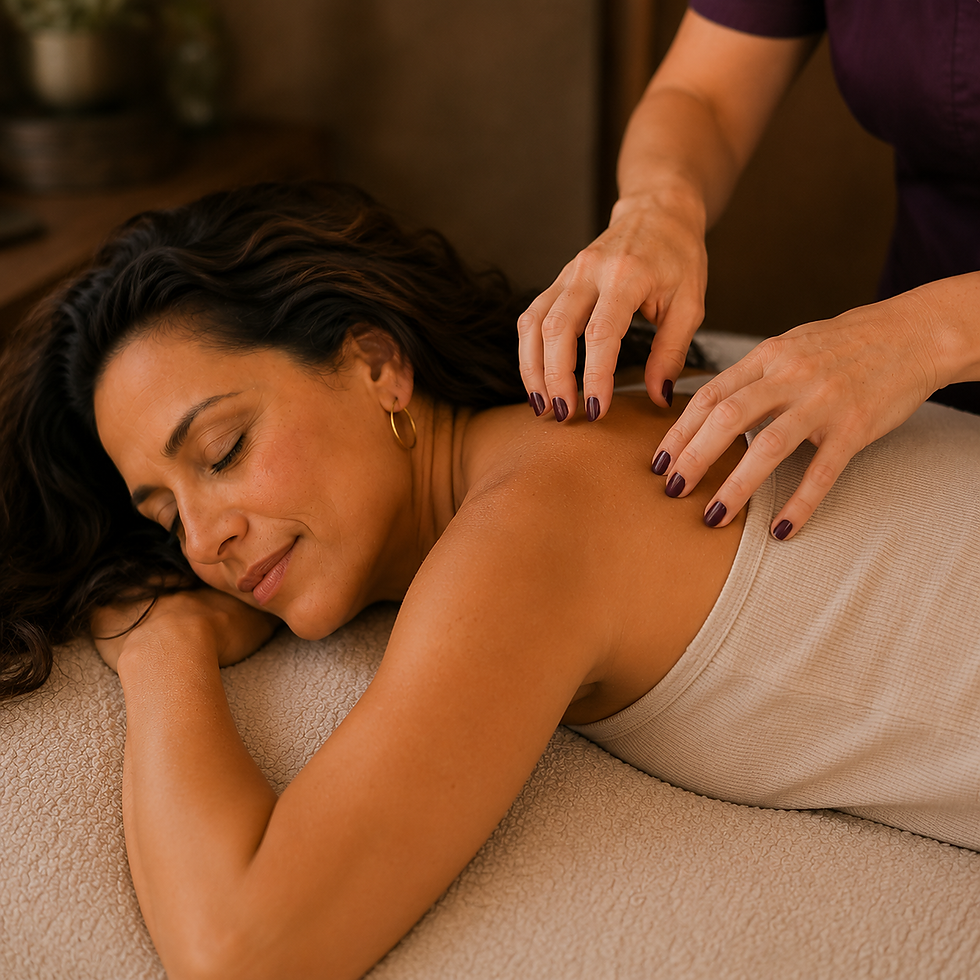
Sensory relaxation is a personalized wellness service built around gentle touch, focused attention, and your sensory preferences.
You choose what feels comfortable, what does not, which areas may be included, and whether you prefer more or less sound, conversation, warmth, scent, or pressure.
Consent stays active throughout the entire session.
You can change your mind at any time. A session may include:
Hair play
Scalp-focused touch
Fingertip tracing
Light scratching
Gentle brushing
Soft sensory tools
Soothing sounds
Warmth
Scent, when requested
These techniques are intentionally light.
This is not massage. I do not knead muscles, manipulate tissue, adjust joints, or provide medical care.
Research into touch offers some helpful context here. A 2024 systematic review and meta-analysis in Nature Human Behaviour examined research on touch across many different populations and types of touch and found associations with several physical and mental well-being outcomes.
That research does not make sensory relaxation a medical treatment.
It does reinforce something pretty simple: touch matters, and personal preference matters too.
That is exactly why your session is customized instead of following one rigid routine.
What to Expect at Your Appointment
Before Your Appointment
Before your session, you complete an intake and consent form along with a Comfort Map.
These forms let you share:
Sensory preferences
Areas you enjoy
Areas you want avoided
Allergies or sensitivities
Preferred techniques
Anything else that may affect your comfort
Clean, dry, combed hair is recommended if you want hair play.
A tank top makes the upper back, shoulders, and arms easier to access.
For longer sessions that may include the legs, shorts can make skin tracing easier.
These are recommendations, not requirements to expose more skin than feels comfortable.
During the Session

We start with a quick conversation about your Comfort Map.
You can confirm your choices, change them, or ask questions before we begin.
You then settle onto the table with pillows or bolsters positioned for comfort.
Soft music or calming sounds may be used depending on your preferences.
A 15-minute session is a shorter introduction to sensory relaxation and is a good option if you are curious about the experience, want to try a few techniques, or prefer a quick reset.
A 30-minute session generally focuses on the head and upper body.
A 60-minute session allows more time and may include additional areas when requested.
You do not need to make conversation.
You do not need to stay perfectly still.
You do not need to tolerate a sensation you dislike.
And you definitely do not need to apologize for asking me to change something.
Some people experience tingles.
Some feel warm, heavy, sleepy, calm, or mentally quiet.
Others simply enjoy the sensations without having a dramatic reaction.
There is no “right” way to relax.
Your Preferences Shape the Experience
One person may love light scratching across the upper back.
Another may strongly prefer fingertips, a soft brush, or hair play.
Some people love silence.
Others relax more easily with conversation or familiar background sounds.
Your Comfort Map gives us a starting point, but your real-time response matters more.
If a tool, sound, scent, area, or technique does not feel right, we switch or stop.
Simple as that.
Is Sensory Relaxation Right for You?
Sensory relaxation may be a good fit if you:
Love having your hair played with
Enjoy ASMR videos
Like gentle skin tracing
Enjoy light scratching
Miss gentle platonic touch
Want something softer than massage
Spend most of your time caring for everyone else
Want uninterrupted time where you get to receive care
You do not have to experience ASMR.
You do not have to like scratching.
You do not need spa experience.
You do not need a perfect explanation of what you want.
Curiosity is enough.
A good first session is not measured by whether you fall asleep or get dramatic tingles.
You may notice your breathing slow.
Your shoulders may soften.
Your brain may finally get a little quieter.
Or you may simply discover one technique that feels unexpectedly amazing.
You may also discover that something popular in ASMR videos is absolutely not your thing.
That is useful information too.
The goal is not to recreate a video.
The goal is for you to feel listened to, respected, comfortable, and able to make choices about your own experience.
When Another Service Is a Better Fit
Sensory relaxation is not the answer for everything, and that distinction matters.
Choose a licensed massage therapist if you want:
Muscle work
Deep pressure
Tissue manipulation
Pain-focused treatment
Choose a head spa or salon professional if you want:
Scalp cleansing
Hair treatments
Professional hair care
Beauty services
Contact an appropriate medical or mental-health professional if you need diagnosis, treatment, or support for a health condition.
Sensory relaxation is a better fit when the experience itself is the goal:
gentle attention, preferred sensations, quiet time, and the chance to receive care without having to take care of anyone else for a while.
A Different Way to Relax
People search for ASMR, head spas, scratch therapy, back tracing, hair play, and scalp scratching because they are trying to put a name to sensations they already know they enjoy.
Sensory relaxation brings several of those elements together while keeping the experience personal.
At Next Level Mindset, skin tracing is at the heart of the experience, with hair play, light scratching, soft tools, sound, warmth, and scent available according to your preferences.
Your session is shaped around your comfort and sensory preferences from start to finish.
My job is to listen, respect your boundaries, and create a calm space where you can receive care for a change.
Stop in. Let me spoil you. ♥


Comments